
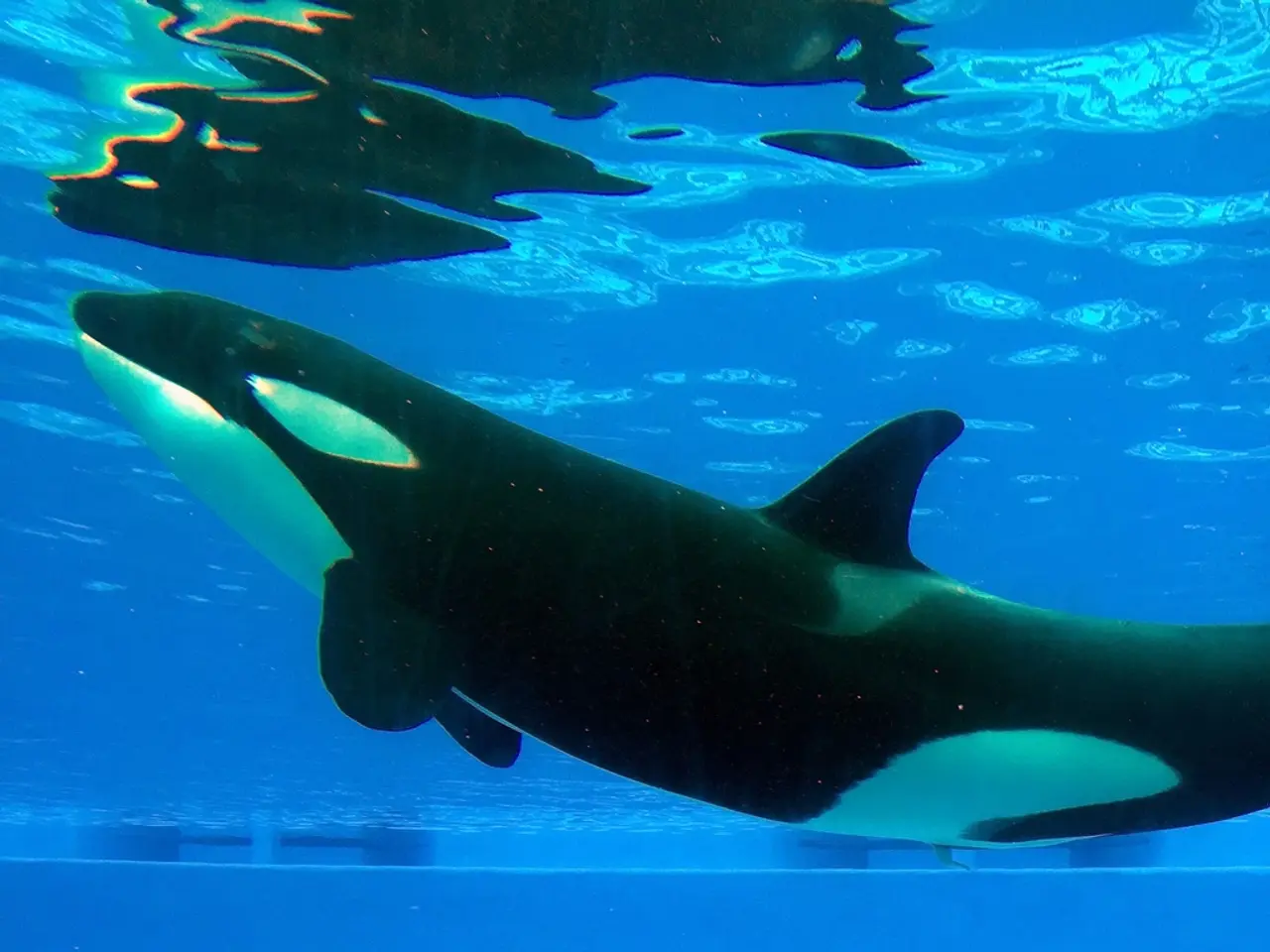
Russia raises a whale, specifically an orca, by a crane from a confinement enclosure in Russia's east, where 97 belugas and orcas have been detained since summer 2018.
In a significant move towards animal welfare and conservation, the Russian government has initiated the process of returning 97 beluga whales and orcas, illegally captured by four Russian companies, to the wild. The decision comes after an outcry worldwide over the capture and treatment of the cetaceans, which were kept in a facility labeled as a "whale jail" in Srednyaya Bay, in Russia's far east.
For over six years, about 87 belugas and 11 orcas were confined in these sea pens, leading to significant distress among the animals, including reports of orcas injuring themselves by banging their heads against the bars. The animals' compromised conditions, with many being too young, weak, or habituated to humans, make their reintroduction to the wild risky.
The first eight animals were moved by authorities from VNIRO, the Russian Institute of Fisheries and Oceanography, and were prepared for transport to the Sea of Okhotsk. The journey, by truck and boat, is estimated to take about five days and will be monitored by 70 specialists, including veterinarians and scientists. Each whale will be accompanied during transport by two people and will be equipped with a GPS tracker before release.
The decision to release the whales reflects governmental recognition of the illegality and ethical issues surrounding their capture. However, the practical challenges of rehabilitation and successful reintegration remain major concerns. Western aquariums are scaling back on keeping cetaceans in captivity, while in China, dolphinariums with wild-caught animals are a booming business.
Deputy Prime Minister Alexey Gordeyev announced the release during President Vladamir Putin's annual televised public call-in program. He also announced a plan to amend Russian law to end the legal capture of cetaceans for "educational and cultural purposes."
In late February, one of the orcas, Kirill, went missing from the facility. Investigations into the alleged illegal capture of the marine mammals were opened in November 2018. The South-Sakhalin City Court declared all 2018 catch quotas for belugas and orcas illegal, nullifying the argument of the four firms that they had government permission to capture the animals.
The transport and release of the cetaceans are being closely watched, with hopes that this move marks a turning point in Russia's approach to the conservation of these majestic creatures. Despite the challenges ahead, the release represents a significant step towards ensuring a brighter future for these illegally captured belugas and orcas.
- Nature enthusiasts and wildlife conservationists are eagerly awaiting the return of the 97 beluga whales and orcas to their natural habitat, as the Russian government begins the process of reintroducing these animals to the wild.
- The decision to release these marine mammals into the Sea of Okhotsk is a testament to the Russian government's growing commitment towards animal welfare and the environment.
- As an investor focusing on personal finance and real-estate, one might question the financial implications of such conservation efforts, but for many, the health of our planet and its wildlife is an essential aspect of a sustainable lifestyle.
- Environmental science plays a crucial role in monitoring the wildlife's progress during and after the release, while climate change scientists observe the impact of these changes on the overall climate and ecosystem.
- The success of the reintroduction project has the potential to spur further investment in environmental-science research, promoting a more responsible approach to wildlife conservation and climate-change mitigation.
- In contrast to Russia's decision, some aquariums and dolphinariums in China continue to profit from the capture of wild cetaceans, raising concerns about ethical treatment and the long-term impact on the ocean's delicate ecosystem.
- The transport and care of the beluga whales and orcas involves a significant financial investment, highlighting the value that society places on the health of our planet and its inhabitants.
- As sports fans, we might engage in sports-betting or follow our favorite teams, but our actions can also contribute to the protection and conservation of wildlife and the environment.
- By choosing travel accommodate providers that prioritize eco-friendliness, and by supporting businesses that invest in conservation projects, we can have a positive impact on the future of our planet's wildlife and environment.
- Whether you're interested in home-and-garden design, finance, business, or sports, it's essential to recognize the interconnectedness of our actions with the health of the planet and its wildlife, and strive to make conscious choices that promote a more sustainable future for all.