Rapid rise in tourism triggers criticism in the ancient core of Athens
In the heart of Athens, nestled below the ancient Acropolis hill, lies Plaka - a neighbourhood steeped in history and tradition. Home to the millennia-old Parthenon temple, Plaka is Europe's oldest continuously inhabited district, dating back to Antiquity [1][3]. However, its charm is being tested by the influx of tourists, particularly during the summer months when its population of 2,000 can be swamped by up to four times as many visitors [1].
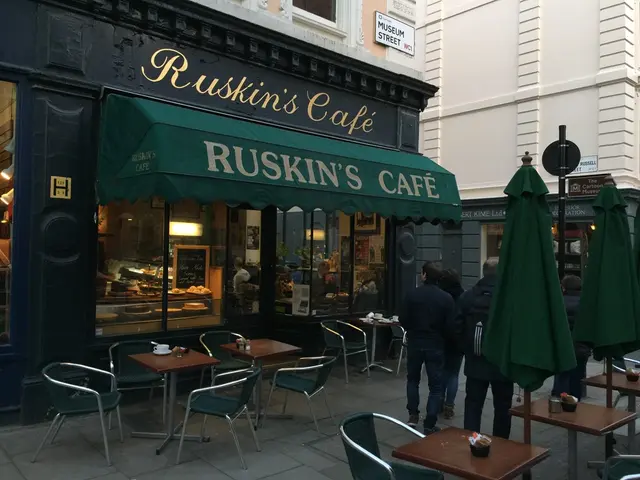
This surge in tourism has led to overtourism, causing disruptions in residents' daily lives, rising living costs, crowded narrow streets, noise, and environmental strain. The area, once known for its authenticity, is now filled with tourists navigating its streets lined with cafes, taverns, souvenir shops, small Byzantine churches, and relics from Antiquity and the Ottoman era [1][2].
To preserve Plaka's cultural heritage and environment, local residents' associations and organisations like the Ellet association are actively involved in advocacy and preservation efforts. These groups focus on balancing tourism growth with protecting historic sites, traditional architecture, and the local environment [2]. Measures include promoting sustainable tourism practices, advocating for regulation of commercial activity, highlighting Plaka's historical significance, managing waste, and limiting noise pollution [2].
While specific policy details were not enumerated in the sources, the engagement of local associations and emphasis on sustainability suggest ongoing initiatives to safeguard Plaka's cultural and environmental integrity amid the booming tourism in Athens [2]. For instance, a 1993 presidential decree protected homes and specified the use of each building in the neighbourhood, with hotels only allowed on certain streets [1]. Additionally, an intervention unit for Plaka has been created to enforce rules with the support of the police [1].
The flourishing tourism sector has not only brought challenges but also economic benefits. Konstantinos Marinakis, a souvenir shop seller, believes Greece's economy has improved due to the good health of the tourism sector [1]. However, the increase in tourism has also led to backlash from locals in popular destinations, with complaints about soaring housing prices and the impact on neighbourhoods [2].
In an effort to address these concerns, the conservative government has banned new registrations of apartments on short-term rental platforms for at least a year in central Athens [1]. Yet, doubts have been expressed about the effectiveness of such measures, with Melissas questioning the continued advertisements for such investments [1]. A case over the legality of 16 buildings converted entirely into seasonal rentals has been taken to the Council of State, Greece's top administrative court [1].
As Athens becomes one of the world's 10 most-visited cities [1], with approximately 10 million people expected to visit in 2025, an increase of two million from 2024 [1], it is crucial that efforts continue to preserve Plaka's unique character and historical significance. Giorgos Zafeiriou, who leads the district's residents' association, has expressed concerns about the threat of overtourism [3].
In conclusion, Plaka, a historic neighborhood in Athens, is grappling with the challenges posed by overtourism. Local residents and organisations are working tirelessly to preserve its cultural heritage and environment, while the government implements measures to regulate tourism growth. As Athens continues to attract visitors, it is essential to strike a balance between economic growth and the preservation of this unique and historically rich neighbourhood.
Sources: [1] The Guardian (2021). Athens' historic Plaka district threatened by overtourism, say residents. [online] Available at: https://www.theguardian.com/world/2021/jul/29/athens-historic-plaka-district-threatened-by-overtourism-say-residents
[2] The New York Times (2021). Athens' Oldest Neighborhood, Plaka, Struggles With Tourism. [online] Available at: https://www.nytimes.com/2021/07/28/world/europe/athens-plaka-tourism.html
[3] CNN Travel (2021). Athens' oldest neighborhood Plaka: A guide to the historic heart of the city. [online] Available at: https://www.cnn.com/travel/article/athens-plaka-guide/index.html
- The surge in tourism in Athens, specifically in Plaka, has led to a rise in living costs for residents due to the influx of cafes, taverns, souvenir shops, and other commercial activities, challenging the neighborhood's traditional lifestyle and environment.
- To maintain the cultural and environmental integrity of Plaka amidst booming tourism, the government and local residents' associations are advocating for sustainable tourism practices, regulating commercial activity, promoting historical significance, managing waste, and mitigating noise pollution, with hopes of preserving the unique character of this ancient district for future generations.