
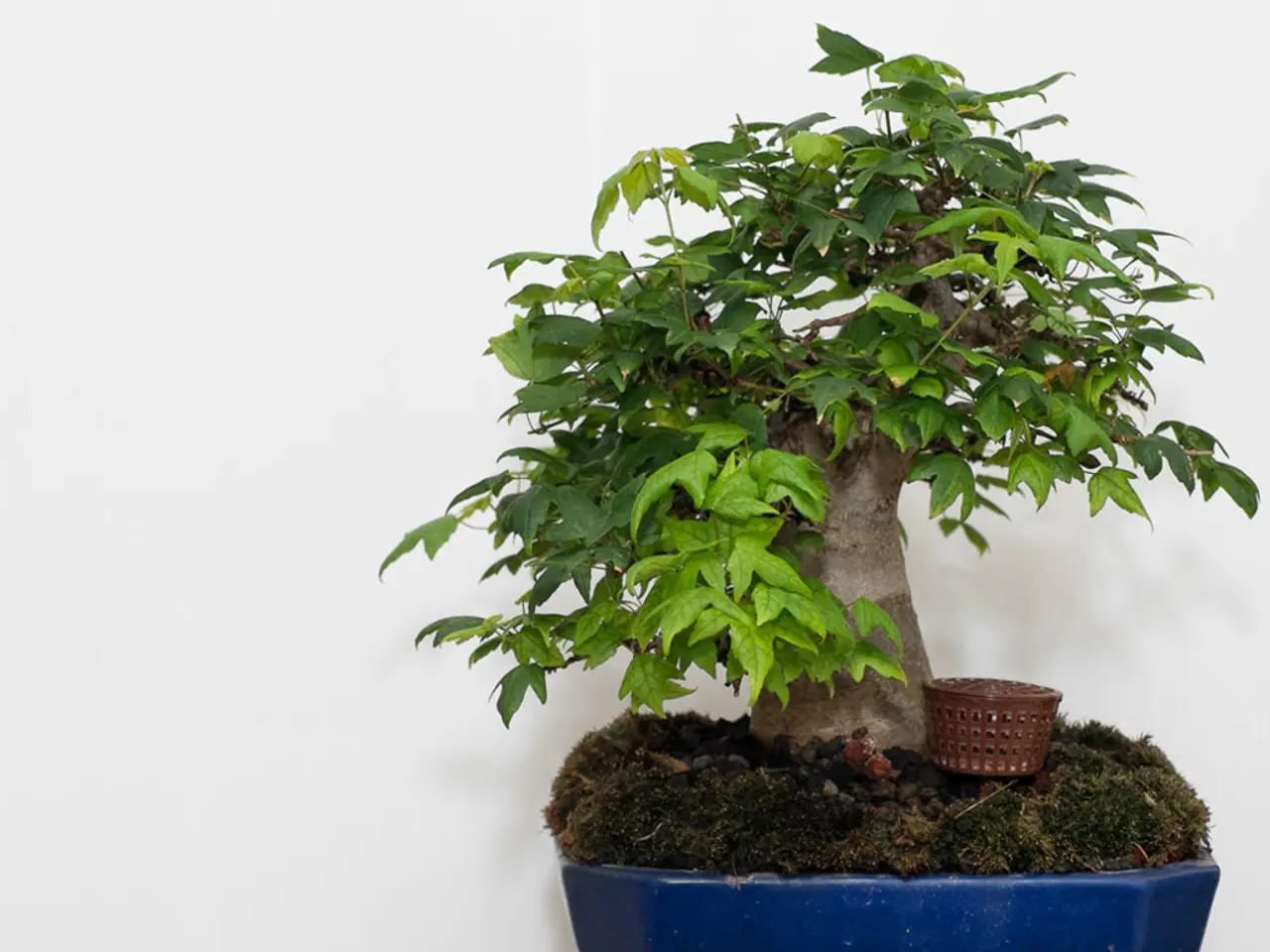
Displays of Bonsai Trees and Their Impact on Perceived Aesthetics: The Role of Staging in Shaping Impressions
In the vibrant world of bonsai, the stand is more than just a functional base. It is an integral part of the art form that elevates the tree's presence, guides the viewer's focus, and evokes profound emotions.
By carefully positioning the stand, bonsai practitioners create a deliberate space for the miniature tree, setting it apart from its surroundings. This separation and elevation help the viewer appreciate the bonsai’s intricate details and form, heightening the sense of harmony and refinement.
The choice of stand material, colour, height, and style is carefully made to complement and not overpower the tree. Symmetry and balance in stand placement create a sense of harmony, allowing the viewer's gaze to flow effortlessly around the tree. Smooth stone exudes an aura of refinement, while polished metal injects a touch of modernity and elegance. Woven fibers create a sense of organic connection, as if the stand is an extension of the tree itself.
The strategic interplay of contrasting colours in a Bonsai display can evoke a sense of dynamic balance. As the stand's colour harmonises with or contrasts against the tree's hues, it subtly influences our perception of the natural beauty. The deliberate use of contrasting colours can guide the viewer's gaze to specific aspects of the tree's design.
A medium-sized Bonsai tree with a balanced, harmonious stand creates a calm, serene visual effect. A small Bonsai tree paired with a delicate, petite stand creates an intimate, refined visual effect. Conversely, a large Bonsai tree with a sturdy, substantial stand creates a grand, majestic visual effect.
The stand's minimalist approach allows the tree to take centre stage, its subtle beauty and intricate details unfolding like a delicate flower. Rough-hewn wood evokes a sense of rustic simplicity, conjuring images of ancient forests and timeless wisdom.
When placing a bonsai stand, consider the tree's visual weight, balancing it with negative space to create harmony. Generally, position the stand at a 45-degree angle to the viewer, with the tree slightly off-center, inviting the eye to explore.
However, it's essential to avoid a stand that is too ornate or distracting, overwhelming the tree's natural beauty and diverting attention from its intricate details. One of the most critical considerations in Bonsai display psychology is the harmonious relationship between the tree's scale and the stand's proportion.
As the art of Bonsai cultivation continues to evolve, a nuanced understanding of display psychology will remain essential in revealing the full potential of this ancient, revered art form. Choosing a stand that complements the tree's natural environment creates a sense of continuity between the natural and the cultivated. The stand's placement can foster a sense of connection between the viewer and the tree, creating an intimate and immersive experience.
In summary, bonsai stands influence psychological perception by elevating and visually isolating the bonsai, providing aesthetic balance, and evoking tranquility and thoughtful appreciation. This synthesis aligns with broader understandings of art presentation’s emotional impact, even if direct research on bonsai stands’ specific psychological effects is limited in the current search results.
In the realm of art and design, the choice of a stand can greatly impact the display of not only bonsai trees but also various elements of our lifestyle. For instance, a fashion-and-beauty product on a delicately designed stand might evoke an air of elegance and sophistication, much like a bonsai tree on a polished metal stand.
Similarly, food-and-drink presentations can benefit from carefully selected stands to showcase their appeal. A stand crafted from smooth stone could effectively exude an aura of refinement and timeless elegance, similar to the way a bonsai tree on a stone stand captivates the viewer's attention.
In the realm of home-and-garden, a plant pot might be chosen to complement the plant's color and form, much like a bonsai tree and its stand. This harmony creates a sense of unity and balance within the space, just as a bonsai tree and its stand do in a bonsai display.
In relationships, the use of thoughtful gestures and considerate choices can create a sense of connection and intimacy, much like the harmonious relationship between a bonsai tree and its stand. Just as a stable and well-proportioned stand enhances the bonsai's beauty, thoughtful actions in relationships can strengthen and elevate the bond between two individuals.
Caring for pets, nurturing education, or exploring travel destinations—each activity requires careful attention and thoughtfulness to enhance the overall experience. Understanding the importance of context and presentation can help in elevating these experiences, much like the strategic placement and choice of bonsai stand.
The art of bonsai stands extends beyond the world of horticulture, offering valuable insights into the psychology of art presentation and the emotional impact of aesthetics on the viewer's experience. This understanding can be applied to various aspects of our lives, from creating more stylish and harmonious home environments to presenting ourselves more effectively in daily interactions.