
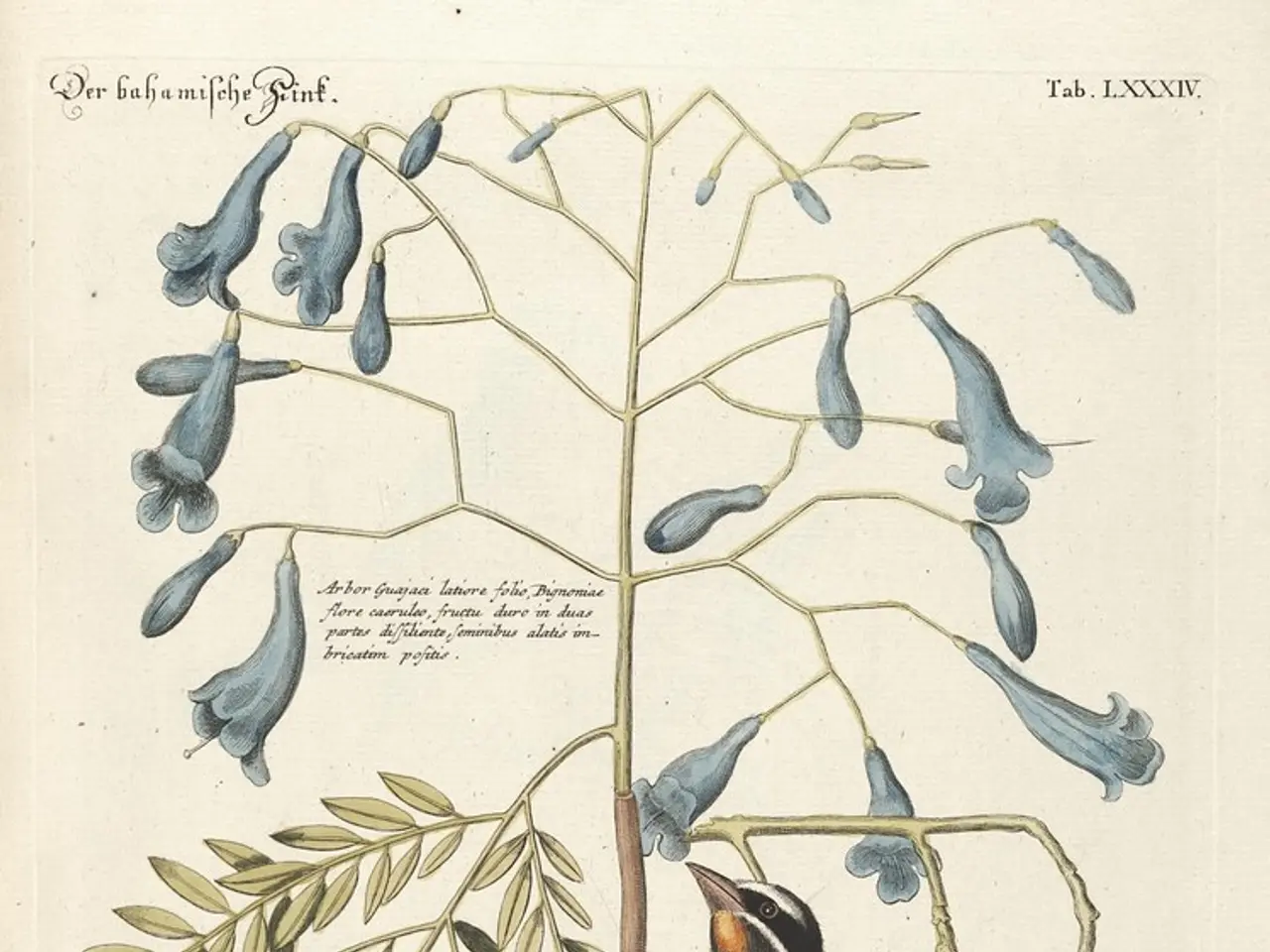
Direct your artistry with plant-motivated designs to boost your creative prowess
In the world of botanical art, there are various techniques that can help improve observation skills and create realistic plant drawings. By mastering these methods, artists can produce highly detailed and lifelike artwork.
One essential approach is accurate and detailed observation. Begin by closely examining the plant's structure, paying attention to its stems, leaves, flowers, and textures. Botanical accuracy is crucial for realism, ensuring that your artwork reflects the true essence of the plant.
Layering colours gradually is another technique that enhances the subtle tones found in real plants. By building up colour depth slowly, artists can create a more nuanced and lifelike artwork. Shading and tonal variation are also crucial for defining form and indicating light direction, giving the drawing a three-dimensional quality.
Sketching and inking techniques are also valuable tools. Start with careful sketches to capture proportions and details, then refine with ink or fine lines to enhance clarity and crispness. Inking helps emphasise delicate botanical features, adding depth and precision to the artwork.
Following professional standards for botanical illustrations improves precision and clarity, especially if the artwork is intended for scientific or educational purposes. Incorporating workshops and guided lessons can teach specialized skills such as plant identification, graphite techniques, and adding selective colour accents, all of which build observation and technical ability.
For those who prefer a more whimsical style, doodle and whimsical plant art offers freedom and creativity. This style features exaggerated shapes, smiling pots, or decorative patterns, and is not focused on botanical accuracy but on charm and fun.
Online platforms offer vast collections of plant images and drawing ideas that can expand creative horizons. Experimenting with colour and materials deepens engagement with plant subjects, such as using watercolor for delicate leaf gradients or colored pencils for precise vein details.
Participating in digital art communities allows sharing work and receiving constructive feedback, discovering challenges and prompts focused on plants that motivate experimentation with styles and approaches. Gardens and outdoor spaces provide diverse plant forms in natural settings, encouraging capturing a broader context, such as plant clusters or their relation to soil, rocks, and insects.
Photographs are a convenient alternative when live plants aren't available, letting you capture moments in time and study intricate details repeatedly. Daily sketchbook prompts help develop consistency and observation skills, starting with simple tasks like drawing a leaf shape or potted plant silhouette.
Using live plants as subjects offers the advantage of observing details like leaf shape, vein patterns, and colour variations directly. By combining these approaches—careful, structured observation, layering, shading, precise sketching, and learning from expert guidance—artists can significantly advance their plant drawing skills and produce highly realistic, compelling botanical art.
- delving into the world of fashion-and-beauty and art, one might find inspiration for whimsical plant illustrations, featuring smiling pots and decorative patterns, rather than focusing on botanical accuracy.
- As an artist interested in education-and-self-development, attending tutorials on graphite techniques and plant identification would help improve precision and clarity in botanical art.
- Venturing into home-and-garden, one can observe the subtle tones found in real plants and apply the technique of layering colours gradually to create a more nuanced, lifelike artwork.
- Traveling to diverse outdoor spaces can provide ample opportunities to capture plant forms in natural settings, encouraging the artist to expand their creative horizons and observe plant clusters or their relation to soil, rocks, and insects.
- In relationships, sharing a common interest in botanical art can bring delight and engage couples in creating collaborative pieces, such as illustrating their favorite flowers or sharing drawing tips.
- After-school hours can be devoted to the pursuit of shopping for art supplies, like watercolor for delicate leaf gradients, colored pencils for precise vein details, or cars for transportation to art workshops or botanical gardens.
- Caring for pets can be a therapeutic and inspiring experience for some artists, as they may draw comfort and inspiration from observing their pets' fur textures or watching their pets play with plants in home-and-garden settings.
- Food-and-drink breaks are essential for maintaining energy levels during marathon drawing sessions, filling the artist's sketchbook with drawings of tasty botanicals like fruits, vegetables, and herbs.